Views: 0 Author: Site Editor Publish Time: 2026-09-28 Origin: Site
For over a decade, the global PC industry has been searching for new growth drivers within a saturated market. From the performance iterations of multi-core CPUs to the fierce competition over GPU gaming capabilities, and from the form-factor evolution of thin-and-light laptops to the space-saving revolution of mini-PCs, every advancement focused on refining the dimensions of speed, size, and weight. Yet, none of these broke free from the core definition of the PC as merely a "tool for executing instructions." It was not until the explosive rise of NPU computing power—propelling AI PCs to the forefront of industry trends—that the personal computer underwent a fundamental paradigm shift: transforming from a mere "computing tool" into an "intelligent collaborative partner."
IDC data projects that the market size for GenAI PCs will grow by 146.5% year-over-year in 2026, with a compound annual growth rate (CAGR) of 58.7% between 2025 and 2029. By 2029, AI PCs are expected to capture a 36.5% share of the total PC market. This is not a fleeting marketing trend; it is the primary growth trajectory for the PC industry over the coming decade.
The global PC market has long since entered an era of market saturation. A recent Goldman Sachs report indicates that, due to factors such as rising hardware costs and the pulling forward of demand in previous periods, global PC shipments are projected to decline by 14% year-over-year in 2026, with the industry remaining in a cycle of adjustment. Even more significant than shipment fluctuations is the persistent lack of user motivation to upgrade devices. Performance improvements in traditional PCs have long since hit the zone of diminishing returns; computers from five years ago can still smoothly handle basic tasks like office work, web browsing, and video playback, leaving users without a compelling reason to upgrade.
Looking back at the history of the PC industry, every major wave of industrial progress spanning a decade or more has stemmed from a revolution in underlying computing architecture: the shift from DOS command lines to the Windows graphical interface represented a transformation in interaction paradigms; the move from single-core to multi-core processors marked an upgrade to parallel computing capabilities; and the transition from integrated to discrete graphics unleashed a massive leap in graphics and 3D experiences. Each transformation has been more than just a minor optimization of the existing user experience; it redefined the value proposition of the PC, thereby triggering a new cycle of device upgrades.
Today, the maturation of AI and NPU technologies is driving a fourth architectural transformation in the PC industry. This time, the upgrade is not about "processing speed" but "intelligent capability." PCs are shifting from passively awaiting user commands to proactively sensing needs, assisting in decision-making, and automatically executing tasks. This leap in the dimension of value is the key to breaking through the stagnation of a saturated market.
Before the advent of AI PCs, PC computing architecture relied on two core components: the CPU and the GPU. CPUs excel at general-purpose logic scheduling, while GPUs excel at parallel graphics rendering; their distinct roles have underpinned the PC application ecosystem for decades. However, traditional architectures struggle to handle the massive tensor operations required by large AI models. Using a CPU for AI inference is highly inefficient, while using a GPU results in excessive power consumption and heat generation—neither is an optimal solution for on-device AI.
The emergence of the NPU (Neural Processing Unit) introduces a third dedicated computing engine to the PC. It features hardware-level optimizations specifically designed for core AI operations—such as matrix multiplication and attention mechanisms—prioritizing low power consumption, low latency, and high throughput for on-device inference. This creates a complementary, heterogeneous computing architecture alongside the CPU and GPU. Each component has a specific role: the CPU handles system operations and general tasks; the GPU manages graphics and heavy computational workloads; and the NPU handles AI inference and intelligent acceleration. Together, they form a comprehensive AI PC computing system.
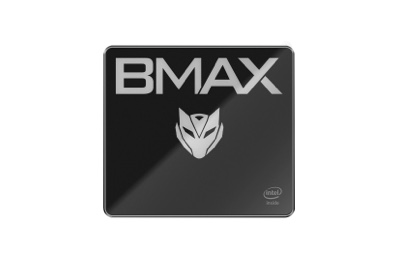
This is not merely a matter of "adding another chip," but a significant expansion and upgrade of the computing architecture. With technological evolution, NPU computing power is experiencing explosive growth—rising from a few TOPS in early iterations to tens of TOPS on today's mainstream platforms. On-device AI has advanced from simply "running basic models" to the practical stage of "smoothly executing large models with 20 billion parameters." Take, for instance, the MaxMini B12 Power mini AI PC from BMAX. It is powered by the Intel Core Ultra 9 185H processor, which integrates a dedicated Intel AI Boost NPU; combined with the CPU and GPU, it delivers a total AI computing performance of 34.5 TOPS. This level of performance is sufficient to smoothly run a large language model (LLM) with 20 billion parameters locally, generate a high-definition AI image in just about one second, and achieve an AI energy efficiency eight times greater than that of CPU-only processing. Even more remarkable is that this entire AI computing architecture is packed into a compact chassis measuring just 126mm × 112mm × 52mm and weighing approximately 410 grams—a palm-sized device possessing full-fledged edge AI computing capabilities. This serves as a prime example of how NPU computing power is becoming ubiquitous and form factors are being liberated: AI capabilities are no longer tethered to bulky tower PCs, as compact devices can now handle professional-grade AI workloads.
NPUs bring more than just a boost in performance metrics; they comprehensively reshape the value logic of the PC industry across four dimensions: user experience, usage scenarios, form factors, and the ecosystem.
The interaction logic of traditional PCs follows a "user issues command, computer executes action" pattern, requiring users to memorize software locations, operational steps, and keyboard shortcuts. AI PCs invert this logic: the NPU runs continuously in the background, proactively understanding user needs and automatically handling tasks such as document summarization, meeting minutes, image processing, and data analysis.
For example, in meeting scenarios, the NPU can transcribe multi-party conversations in real-time, automatically extract action items, and generate meeting minutes. In office settings, users can search all local files using natural language and summarize hundreds of pages of documents with a single click. In creative workflows, AI assists with generating copy, image masking and editing, and automatic subtitle generation. This experience of "proactive intelligent assistance" represents a new kind of value that traditional PCs simply cannot offer.
While traditional PCs were primarily centered on consumer entertainment and general office tasks, AI PCs—leveraging features like the privacy and security of local computing and offline functionality—have unlocked a wider range of high-value industry applications.
For sensitive sectors such as finance, law, and design, AI processing for documents, meetings, and design drafts occurs locally; data does not need to be uploaded to the cloud, thereby eliminating the risk of leaks at the source.
For SMEs and creative studios, there is no need to purchase enterprise-grade cloud AI services; a single AI PC can meet the AI-driven productivity and creative needs of the entire team, significantly reducing digitalization costs.
For specialized environments like education and industrial control, offline-capable local AI eliminates reliance on network connectivity, ensuring intelligent support remains available even without internet access.
The widespread adoption of products like the BMAX MaxMini B12 Power has further lowered the barrier to entry for these industry applications. Pre-installed with Windows 11 Pro and supporting dual-booting with Linux (Ubuntu), it adapts to the software environments of various industries. It features a one-click recovery function for rapid system resets, reducing enterprise maintenance costs. Additionally, its rich array of ports and support for triple-display setups allow for connections to monitors, projectors, and industrial control equipment, offering flexibility across office work, design, and industrial control scenarios.
The low-power nature of NPUs has shattered the long-held notion that "high performance equals bulky size." AI computing power no longer relies on massive tower PCs or high-end discrete graphics cards; thin-and-light laptops, mini PCs, and all-in-one (AIO) systems can now integrate full AI capabilities, driving PC form factors toward greater diversity and portability.
Take the mini PC market, for instance: in the past, mini PCs were often viewed merely as "backup units" or basic "office machines" with limited performance. Thanks to the inclusion of an NPU, the BMAX MaxMini B12 Power delivers powerful AI computing capabilities within a compact 410g chassis. It pairs this with 24GB of high-speed LPDDR5 memory (4400MHz–5600MHz) and a 1TB NVMe SSD, while also offering an extra M.2 2280 PCIe slot and a 2.5-inch SATA drive bay for scalable storage. Its innovative "Space Capsule" cooling system—featuring enlarged dual copper heat pipes, a high-performance "Giant Turbo" smart fan, and designs for top-side air intake and dense side vents—delivers superior thermal efficiency. This boosts performance by 15%–25%, ensuring stable, high-load operation for large AI models. These features elevate the mini-PC from a merely "functional" device to a capable, primary AI workstation, redefining the desktop computer form factor.
The rise of the AI PC is not driven by a single manufacturer but by the collective synergy of the entire industry chain. Upstream, chip giants like Intel, AMD, and Qualcomm are launching new-generation processors with integrated NPUs to continuously enhance on-device AI computing power. At the system level, Microsoft has deeply integrated Copilot+, enabling native Windows support for local AI functions. At the application level, a wide range of office suites, design tools, and video editing software are rolling out AI features optimized for NPU hardware acceleration.
From chips to systems and hardware to software, a closed-loop AI PC ecosystem has taken shape. It is now entering a virtuous cycle where hardware upgrades drive software innovation, and software innovation, in turn, fuels demand for hardware. This trajectory closely mirrors the rise of 3D gaming, which was propelled by the widespread adoption of GPUs—starting with hardware proliferation, followed by an explosion of applications, and ultimately establishing an irreversible industry trend.
Markets never lack short-term trends, but the AI PC is viewed as the defining industry theme for the "next decade" because it rests on three fundamental pillars that ensure long-term certainty and growth potential. 1. An Irreversible Shift: AI Moving from "Optional Feature" to "Standard Capability"
History has a remarkable way of repeating itself. Twenty years ago, discrete graphics cards were the exclusive domain of high-end gamers; yet, with the rise of 3D gaming, they became a standard PC component—to the point where computers lacking them could not even run mainstream software. Today, the NPU stands at the same starting point where the GPU once began its evolution.
Canalys forecasts that the market share of AI PCs within the Windows PC market will grow from less than 10% in 2024 to 50% by 2026. Meanwhile, IDC projects that global AI PC shipment penetration will reach 79% by 2027, with the Chinese market hitting as high as 85%. In the coming years, as AI-native applications proliferate, traditional PCs lacking NPU computing power will struggle to smoothly run the next generation of office, design, and entertainment software, eventually facing market obsolescence. NPUs will join CPUs and GPUs as standard PC components.
Cloud AI and on-device AI are not mutually exclusive alternatives but rather complementary elements of a hybrid architecture. Cloud AI excels at handling large-scale, non-sensitive, and infrequent complex tasks, whereas on-device AI handles high-frequency, lightweight, privacy-sensitive tasks requiring real-time responses; combining the two yields the optimal AI experience.
The advantages of on-device AI are structural: local data processing enhances privacy and security; the elimination of network transmission reduces latency and speeds up response times; a one-off hardware investment leads to lower long-term usage costs; and offline capabilities offer greater adaptability across various scenarios. As lightweighting technologies for large models rapidly evolve, the range of tasks manageable on-device will expand—spanning everything from text generation and image processing to video creation and 3D rendering—thereby continuously amplifying the value of on-device AI.
As the personal computing terminal with the most comprehensive functionality and robust computing power, the PC is inevitably the most critical platform for on-device AI. Compared to smartphones, PCs offer superior thermal management, higher computing ceilings, and a wider array of peripheral interfaces, making them better suited for prolonged, professional-grade AI workloads.
NPU technology is currently in a phase of rapid evolution, offering immense potential for increased computing power, architectural optimization, and improved energy efficiency. Chip roadmaps indicate that NPU computing power will continue to grow rapidly, supporting increasingly large model parameter scales and delivering higher-quality generative output. Simultaneously, advancements in AI model lightweighting and quantization technologies mean that the same level of computing power can now deliver more powerful intelligent experiences.
This implies that the value of an AI PC is not static; rather, it compounds as technology evolves. While today’s AI PCs handle tasks like document summarization and image generation, future models will support local video generation, real-time 3D rendering, and intelligent code development. By continuously unlocking new application scenarios and creating value for users, they will underpin a decade-long cycle of industry upgrades.
AI PCs are no longer the exclusive domain of high-end flagships costing thousands of dollars; they are rapidly penetrating mainstream price points and diverse form factors. Mini AI PCs, in particular, have emerged as a pioneering force in this mass adoption, thanks to their compact size, low power consumption, and excellent price-to-performance ratio.
Products like the BMAX MaxMini B12 Power combine a flagship-grade Core Ultra 9 185H processor and powerful NPU-based AI computing capabilities with the inherent advantages of mini-PCs—compactness, quiet operation, and space efficiency. Its "Starry Blue" finish and ruggedized craftsmanship balance aesthetics with durability, while WiFi 6 and Bluetooth 5.2 ensure high-speed wireless connectivity. A comprehensive array of ports—including full-function Type-C, HDMI 2.1, DP, and 2.5G LAN—meets the needs of various peripherals. Users can enjoy a complete on-device AI experience without paying a hefty premium or sacrificing valuable desk space.
Looking back at the PC industry's evolution over the decades, every major industry wave—spanning ten-year cycles—has begun with a revolution in underlying architecture, flourished through ecosystem-wide prosperity, and ultimately reshaped our digital lives. From single-core to multi-core, from 2D to 3D, and from desktop to mobile, each transformation has redefined what a computer can do.
Today, the explosion of NPU computing power is ushering in the era of intelligent personal computing. The AI PC is not merely a "computer plus AI," but a fundamental evolution of the PC form factor itself—transforming the device from a tool into a partner, shifting from passive command execution to proactive collaboration, and moving from performance-driven to value-driven design. This is not a fleeting trend but the primary growth trajectory for the PC industry over the coming decade; the transformation has only just begun.