Views: 0 Author: Site Editor Publish Time: 2026-10-13 Origin: Site
As AI becomes a standard feature in office work and creative processes, many people focus solely on the boost in efficiency while overlooking a critical question: Do the contracts, creative proposals, meeting recordings, and design assets you upload to cloud-based AI tools truly remain yours?
The reality is that the user agreements for many mainstream cloud AI services explicitly state that user input from non-paid versions may be used by the platform for model training and product optimization. This means your trade secrets, original ideas, and sensitive data could unknowingly become part of a public model. Not to mention potential risks such as data leaks during network transmission, server breaches, or account hijacking.
The emergence of the AI PC is reshaping the logic of data security in the AI era—bringing computing power back from the cloud to the local device. By ensuring all data processing takes place within a closed loop on your device, it constructs a "local data fortress" that does not rely on the network.
When using online AI tools, many people focus only on functionality, failing to realize that their data is slipping out of their control. The cloud AI model presents at least three major security concerns:
First, risks related to data retention and training. The documents, images, and recordings you upload do not vanish immediately after a session ends. Most platforms retain data on their servers, and input from non-paid users is often used for model iteration. An undisclosed business proposal or a set of original design drafts could slip beyond your control the moment they are uploaded.
Second, risks of leaks during transmission and storage. Data travels back and forth between the local device and the cloud, creating opportunities for interception with every network request. Furthermore, if a cloud server is attacked, the consequences of a mass data breach could be immeasurable. For sectors such as finance, law, and government, this directly violates data compliance standards.
Third, risks associated with accounts and access permissions. All data is linked to a user account; if an account is compromised or a departing employee's access rights are not revoked in time, the entire history of AI interactions could be exposed, putting core corporate assets at risk of loss. In essence, using cloud-based AI involves "trading data for services," whereas the core value of an AI PC is that it allows you to enjoy high-efficiency AI generation without sacrificing your data.
The reason AI PCs can achieve a higher level of data security lies primarily in on-device AI inference. Powered by an integrated NPU (Neural Processing Unit), large models run directly on the local machine; all data input, processing, and output occur entirely within the device, eliminating the need to transmit information to any cloud server.
This is akin to moving an entire AI studio into your computer. From the moment data enters the system until the final result is generated, the entire process remains within your own "walled garden," effectively eliminating potential pathways for data leakage at the source. As industry experts note, local, offline AI computing capability is one of the distinct advantages AI PCs hold over the "cloud AI + traditional PC" model.
For enterprises, local processing also facilitates better compliance with data protection regulations, keeping sensitive data under internal control and avoiding compliance risks associated with cross-region or cross-platform data handling.
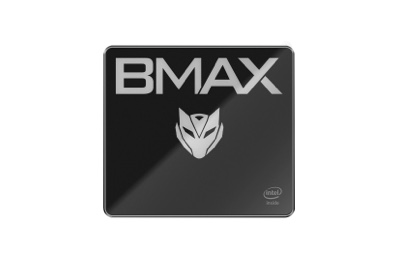
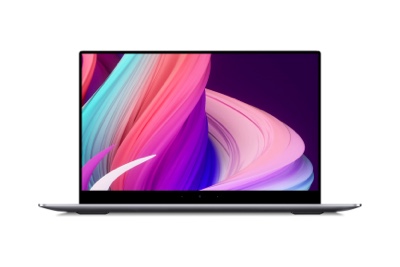
Represented by the BMAX MaxBook X17 Turbo laptop and the MaxMini B12 Power mini-PC, these AI PC products establish a comprehensive local data security system across three dimensions: computing power, storage, and system architecture.
True security relies on the ability to implement AI capabilities locally. These two products are equipped with the Intel Core Ultra 5 115U and Core Ultra 9 185H processors, respectively. Both feature the integrated Intel AI Boost NPU, delivering 11 TOPS and 34.5 TOPS of local AI computing power. They can smoothly run large models with 7 billion to 13 billion parameters, easily handling mainstream AI tasks even when completely disconnected from the cloud.
• Office Scenarios: Contract review, financial report analysis, meeting minutes, and proposal writing—all sensitive documents are processed and parsed locally without uploading to any third-party servers.
• Creative Scenarios: Text-to-image generation, image editing, video editing, and subtitle generation—all creative content can be generated locally, preventing it from becoming training material for the platform and ensuring you retain full control over your original intellectual property.
• Offline Scenarios: AI functions continue to work even in offline, no-signal, or intranet environments, completely eliminating the possibility of data leakage during network transmission.
Both AI PC models feature a synergistic "CPU + GPU + NPU" architecture. All AI tasks are handled by the NPU, leaving main system resources free; this ensures data security without compromising productivity or creative workflows.
True data security begins with storing data on your own device. BMAX AI PCs balance speed and capacity, allowing you to manage core data without relying on cloud storage services.
Both models come equipped with high-speed NVMe SSDs (512GB and 1TB options), offering read speeds more than six times faster than traditional SATA SSDs. The system, software, AI models, and sensitive assets are all stored locally, enabling near-instantaneous loading and access. The MaxMini B12 Power model goes a step further by supporting dual-drive expansion—featuring both an M.2 NVMe slot and a 2.5-inch SATA drive bay—allowing you to easily expand storage capacity without compromising on security.
Paired with 16GB of high-speed LPDDR5 4400MHz memory, large AI models can be fully loaded and run locally. There is no need to split models or access cloud-based segments, ensuring a completely self-contained data processing loop.
Beyond hardware security lies comprehensive system-level protection. BMAX’s entire AI PC lineup comes pre-installed with Windows 11 Pro, featuring enterprise-grade protections such as BitLocker drive encryption and hardware-level Secure Boot. These measures safeguard data at the system level, preventing unauthorized access even if the device is lost.
Additionally, the devices feature BMAX’s proprietary intelligent recovery system. In the event of a system failure or virus attack, users can quickly restore the device to its factory state with a single click, preventing data corruption or loss caused by system crashes. For users with specialized needs, the systems also support Ubuntu installation, catering to customized security and development requirements.
A truly effective security solution should not come at the expense of efficiency. BMAX offers two AI PC models tailored to different usage scenarios, balancing mobility with security.
For mobile office needs, choose the MaxBook X17 Turbo. With a lightweight metal chassis weighing 1.7kg and a slim 19mm profile, it is ideal for business trips, meetings, and client consultations. The 15.6-inch high-definition screen meets the needs of office work and creation, and the 9-10 hour long battery life provides you with powerful energy support. You can use local AI to handle sensitive work without connecting to public WiFi, avoiding the risk of data leakage under public networks.
For fixed-workstation setups, choose the MaxMini B12 Power. Its palm-sized, compact design saves desk space while delivering powerful AI computing capabilities and a wide array of ports. It can be deployed directly within corporate intranets to create secure, controlled local AI workstations—making it particularly suitable for sectors with stringent data security requirements, such as government, finance, law, and design. A dual-drive design allows for separate storage of work data and system files, further enhancing data security.
Local AI does not mean completely abandoning the cloud. BMAX AI PCs support flexible switching between "cloud" and "edge" (local) modes, allowing you to process data based on its sensitivity level:
Core secrets, sensitive materials, and unreleased projects: Utilize local NPU computing power for fully offline processing, ensuring absolute security;
General information queries, non-sensitive content creation, and massive model tasks: Access cloud computing power via the internet, balancing efficiency and cost.
This model safeguards the bottom line of data security while retaining the flexibility of cloud-based AI, ensuring that security and efficiency are no longer mutually exclusive choices.
In an era where AI permeates every aspect of work and life, data security is not merely an optional extra—it is an inviolable bottom line. It concerns corporate trade secrets, creators' intellectual property, and the personal privacy of every individual.
The true value of an AI PC lies not in simply combining a computer with AI, but in returning control of data to the user. You no longer have to choose between enjoying the convenience of AI and protecting your data security, nor do you need to sacrifice your core assets for the sake of efficiency.
With local computing power at their core and backed by triple-layer protection, the BMAX MaxBook X17 Turbo and MaxMini B12 Power build a dedicated "local data fortress" for every user and enterprise.
Embrace the AI era, but safeguard your data boundaries. This is what an AI PC should truly be.